Knee Arthroscopy
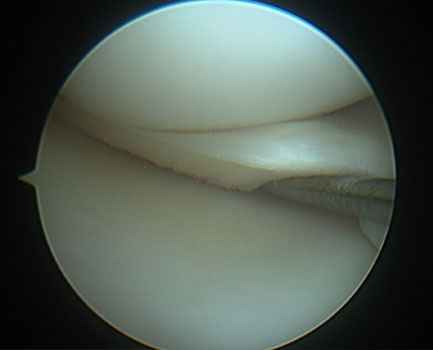
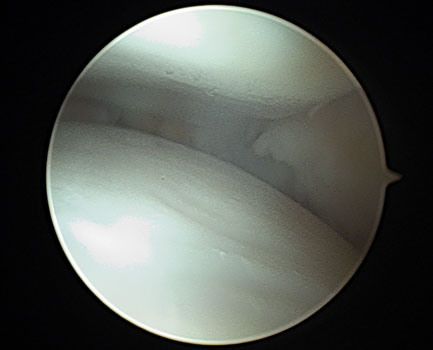
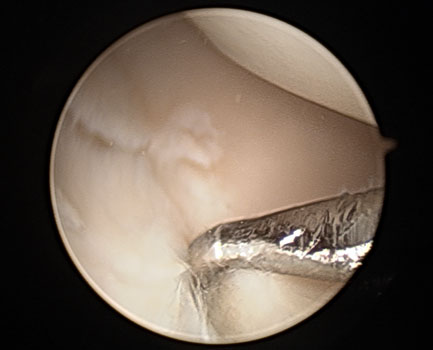
Arthroscopic surgery on the knee involves inserting a small camera into the knee joint through a small incision.
The camera is attached to a video monitor so I can see inside the knee.
 |
 |
| Why Arthroscopy? |
- Meniscus Tear
- ACL/PCL injury
- Synovitis
- Chondral flap
- OCD lesion
- Kneecap release
- Loose bodies
- PVNS
|
|
Salt water (saline) is put into the knee joint to expand the joint which helps visualisation of the joint and control bleeding.
After looking around the entire knee for problem areas additional small surgical incisions are made to insert other instruments.
Commonly used instruments include:
- A blunt hook to pull on various tissues
- A shaver to remove damaged or unwanted soft tissues
- Special scissors to remove unwanted pathology
- Special sutures
| NORMAL |
 |
 |
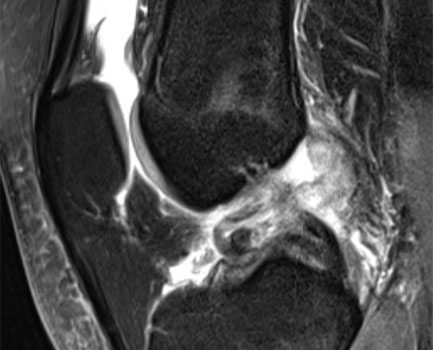
| MENISCAL TEAR |
 |
 |
| OCD LESION |
 |
 |
| EARLY ARTHRITIS |
 |
 |

Risks of Knee Arthroscopy
The risks for any anesthesia are:
- Allergic reactions to medications
- Risks of General Anaesthetic - patient specific
Specific risks of knee arthroscopy include:
- Bleeding into the joint (haemarthrosis) - 1 in 100
- Infection - 1 in 1000
- Damage to the cartilage or meniscus
- Failure of the surgery to relieve symptoms
- Knee stiffness
- Scaring of the skin or lump under the wound
- Deep Vein Thrombosis (DVT) - 1 in 750
- Pulmonary embolus (PE) - risk 1 in 3000
- Severe pain (Complex Regional Pain Syndrome) - rare
Outlook (Prognosis)
In general the use of arthroscopy compared to open surgery has:
- Decreased length (if any) of hospital stay
- Faster recovery time
- Fewer complications
- Less pain and stiffness
The expectations vary depending on the cause for the surgery.
More Reading
http://orthoinfo.aaos.org/topic.cfm?topic=A00299

Knee Arthroscopy
You will need to have the FREE Adobe Acrobat Reader installed on your system to view this document. Download the Reader by clicking on the Acrobat icon below.

|